
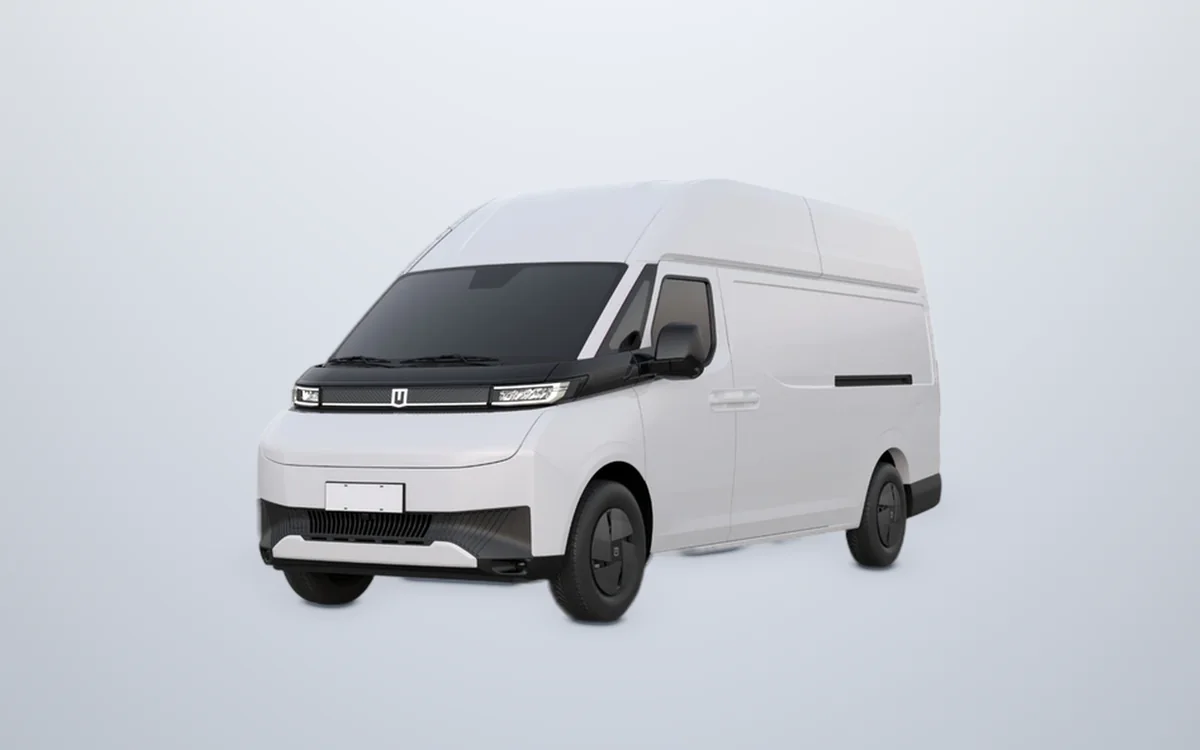
Image: Farizon via Newspress Australia. Background replaced by 1300EV. All photo credits
Farizon SuperVan
Price and range from a dated third-party guide; confirm with the dealer before buying.
Variants, prices & specs
Each price links to its source. A dash means we haven't confirmed that figure yet.
| Variant & prices | Battery | Range | Power | Torque | 0–100 | Drive | Seats | DC / AC | Energy use | Payload | Cargo |
|---|---|---|---|---|---|---|---|---|---|---|---|
SWB LR 83kWh
$62,990MRLP · before on-roadsCars24 – Farizon SuperVan lineup gets a new flagship and price cuts · checked 2 Nov 2026 |
83 kWh | — | — | — | — | — | — | — | — | — | 6.95 m³ |
LWB LR 83kWh
$64,990MRLP · before on-roadsCars24 – Farizon SuperVan lineup gets a new flagship and price cuts · checked 2 Nov 2026 |
83 kWh | — | — | — | — | — | — | — | — | — | 8.25 m³ |
LWB HR 83kWh
$69,490MRLP · before on-roadsCars24 – Farizon SuperVan lineup gets a new flagship and price cuts · checked 2 Nov 2026 |
83 kWh | — | — | — | — | — | — | — | — | — | 11.22 m³ |
SLWB HR 106kWh
$77,490MRLP · before on-roadsCars24 – Farizon SuperVan lineup gets a new flagship and price cuts · checked 2 Nov 2026 |
106 kWh | 398 km WLTP |
— | — | — | — | — | — | — | 1075 kg | 13 m³ |
What it costs to drive 100 km
Using the SuperVan SLWB HR 106kWh's estimated energy use (battery ÷ WLTP range) of 26.6 kWh/100 km and today's Melbourne prices.
Compared with petrol, hybrid and diesel
Your yearly fuel bill
Electricity: Victorian Default Offer 2026–27iSource: Essential Services Commission – Victorian Default Offer 2026–27 (flat rates 26–32c/kWh across Melbourne networks) · checked 31 Oct 2026. Public charging: typical network pricesiSource: Canberra Times – cost of fast charging (Chargefox, Evie, NRMA, Tesla, BP Pulse: 59–79c/kWh, July 2026) · checked 31 Oct 2026. Fuel: Melbourne median prices, 29 Oct 2026iSource: FuelCrisis.com.au – Greater Melbourne median unleaded 91, 29 Oct 2026 · checked 31 Oct 2026. Energy and fuel use are official laboratory figures (WLTP for EVs, ADR 81/02 for petrol, hybrid and diesel). Real-world use is usually higher for every car, and EVs also lose a little energy while charging. Solar or an EV electricity plan can cost much less. Checked 31 Oct 2026.